For an RO brand, dealer or service network, the quality of spare parts directly affects installation time, complaint rates and customer trust. A low purchase price can quickly become expensive if pumps fail early, filters vary from batch to batch or fittings do not match the system.
Choosing a partner for RO water purifier spare parts wholesale therefore requires more than comparing a quotation. A reliable supplier should be able to explain what it sells, maintain consistency across repeat orders and support the buyer when a component does not perform as expected.
Start with your actual requirement
Before evaluating suppliers, define what you need. List the component categories, technical specifications, monthly quantity, acceptable lead time, packaging needs and markets you serve. A domestic purifier assembler may need membranes, pumps, inline filters, housings, valves and electrical parts in coordinated volumes. A service distributor may need a wider mix of fast-moving replacements in smaller lots.
A clear requirement prevents price comparisons between products that only appear similar. It also helps the supplier recommend compatible parts instead of sending a generic catalogue.
1. Check the breadth and depth of the range
A broad portfolio can simplify purchasing, but the number of items alone is not enough. Check whether the supplier carries meaningful variants within each category: membrane capacities, pump voltages, filter media combinations, housing sizes, switch ratings and fitting types.
Depth matters because RO systems are not universal. If the supplier cannot distinguish between applications, you may receive a part that physically fits but does not perform correctly. Ask for model-wise specifications rather than choosing only from photographs or informal product names.
2. Evaluate product consistency
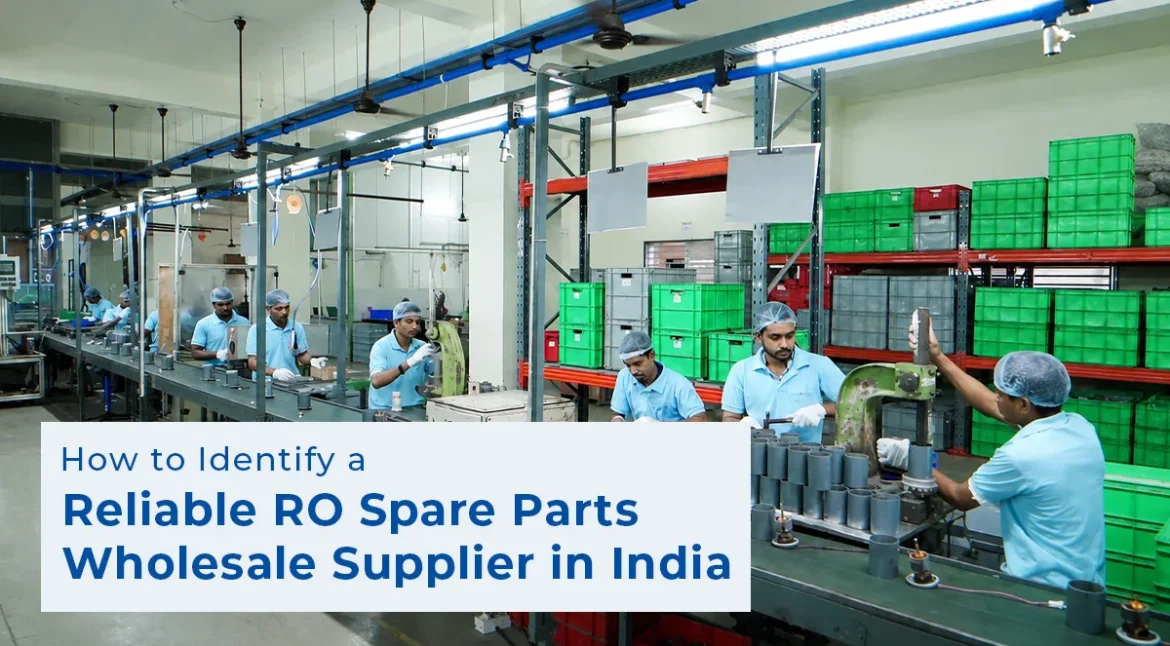
The first sample can be good; the real test is whether the tenth repeat order behaves the same way. Ask how the supplier controls incoming materials, production or sourcing, batch identification and final inspection. For performance components such as membranes and booster pumps, request declared operating conditions and measurable parameters.
Consistency should also cover dimensions, connectors, labels and packaging. Small changes can create problems on an assembly line or force technicians to carry additional fittings. A dependable supplier communicates approved changes in advance instead of allowing the buyer to discover them during installation.
3. Ask for technical documentation
A reliable wholesaler should provide enough information for informed selection and safe use. Depending on the component, useful documents may include specifications, installation instructions, electrical ratings, flow or pressure data, material information, storage guidance and warranty terms.
Documentation does not need to be complicated, but it should be specific. Statements such as ‘heavy quality’ or ‘best performance’ cannot replace a rated voltage, flow range, connection size or test condition.
4. Verify compatibility support
Many wholesale disputes begin with a compatibility assumption. Before ordering, share the purifier layout, membrane capacity, tube size, adapter rating and any space constraints. The supplier should be able to confirm the intended use or clearly state where field validation is required.
This is especially important when parts are being substituted. A replacement booster pump must match the hydraulic and electrical system; a membrane must match the housing and operating pressure; an inline cartridge must suit the desired treatment stage and flow direction.
5. Review quality and compliance evidence
Ask which standards or certifications apply to the finished purifier and to the supplied component. In India, BIS lists IS 16240:2023 for RO-based point-of-use drinking-water treatment systems. A component label by itself does not prove that an entire purifier complies with the standard, so buyers should understand the scope of every certificate or test report presented.
Check that documents identify the issuing body, product or model, standard, date and validity. If a claim is important to your sales or regulatory process, verify it with the issuing organisation rather than relying only on a logo printed in a catalogue.
6. Assess commercial reliability
Good parts are of limited use if they are not available when production or service teams need them. Discuss minimum order quantity, ready-stock position, normal lead time, forecast process and handling of urgent requirements. Ask what happens when an item is backordered and whether the supplier offers a documented substitute.
Pricing should be transparent about taxes, freight, packaging, payment terms and any tooling or branding cost. Compare the total landed cost and expected failure risk, not only the unit rate. A slightly higher but consistent part can cost less across installation, warranty and service.
7. Inspect packaging and traceability
Wholesale parts often pass through several warehouses before installation. Packaging should protect them from moisture, dust, crushing and mix-ups. Labels should make the component, model, quantity and batch easy to identify without opening every carton.
Traceability is valuable when a complaint occurs. With a batch or lot reference, the supplier can review related stock, production records and previous shipments. Without it, both parties are left guessing whether the issue is isolated or widespread.
8. Test after-sales responsiveness
Ask about the complaint process before placing a large order. Who receives the complaint? What evidence is needed? How quickly is an initial response provided? Will the supplier analyse the failed part or simply replace it? A mature process separates installation errors, application mismatch, transit damage and actual product defects.
Responsiveness during sampling is often a good indicator of what support will feel like after purchase. Clear answers, written follow-up and realistic commitments matter more than instant promises.
Run a controlled supplier trial
For a new supplier or critical component, begin with a controlled evaluation. Approve the specification, test samples under your real operating conditions, record results and then place a limited commercial order. Monitor assembly feedback, field performance and complaint patterns before increasing volume.
Use the same acceptance criteria for every supplier. This creates a fair comparison and prevents a purchasing decision from depending on one good demonstration piece.
Red flags to watch for
- Specifications change between conversations or are not provided in writing.
- The supplier cannot identify the manufacturer, batch or source of critical parts.
- Certificates are shared without a matching model, scope or validity.
- Prices are unusually low but packaging, warranty and freight terms remain unclear.
- Samples perform differently from the supplied commercial batch.
- Complaints are handled only through verbal assurances with no record or analysis.
Building a stronger component supply chain
A reliable wholesale relationship is built on repeatability. The supplier should understand the application, provide clear specifications, deliver consistent batches and remain accountable after dispatch.
Lexcru offers a broad range of RO components for brands, assemblers, distributors and service businesses. By evaluating each requirement around compatibility, volume, operating conditions and support needs, buyers can build a component mix that is easier to source, install and maintain.